

VoIP for healthcare gives hospitals, clinics, and multi-site care teams a more reliable way to manage patient calls, telehealth, routing, reminders, and internal coordination without relying on aging phone hardware. The goal is not just replacing a phone line. The real value is building a secure cloud communication layer that helps patients reach the right person faster, helps staff spend less time on manual call handling, and gives leaders better visibility into every interaction.
Modernize patient communication with BluIP Cloud UCaaS and PBX. Request a demo.
What Is VoIP for Healthcare?
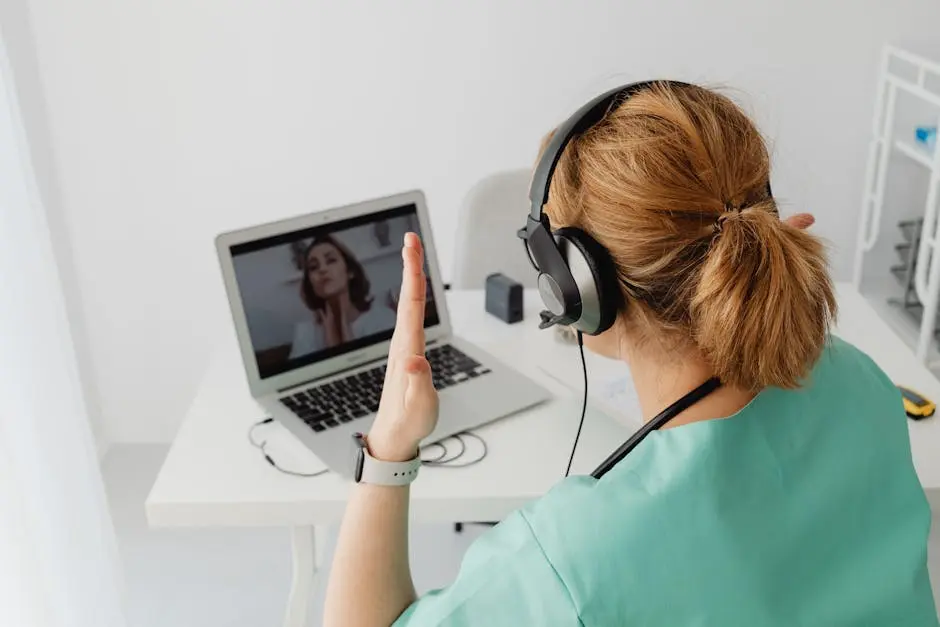
VoIP for healthcare is a cloud-based phone system that carries voice calls over an internet connection instead of traditional copper phone lines or on-premise PBX equipment. For healthcare organizations, that means calls can be routed, recorded where appropriate, analyzed, forwarded, and integrated with other digital systems from a centralized platform.
A healthcare VoIP system can support front desk scheduling, nurse triage, specialist referrals, patient reminders, telehealth workflows, emergency notifications, after-hours routing, and multi-location call management. When it is paired with a cloud PBX platform, healthcare teams can manage communication across facilities, departments, and devices without maintaining separate phone systems in every office.
For patients, the difference is simple: fewer busy signals, fewer missed calls, faster routing, and more ways to connect. For providers, the difference is operational. VoIP makes communication easier to scale, easier to measure, and easier to align with modern patient expectations.
Why Healthcare Communication Needs a Refresh
Healthcare communication has changed dramatically. Patients now expect the same speed and convenience they get from banking, retail, travel, and delivery apps. They want appointment reminders, quick answers, digital follow-up, and a clear path to a real person when the question is urgent.
Traditional phone systems were not built for that level of demand. They often create long hold times, voicemail bottlenecks, limited after-hours coverage, and fragmented records across departments. In larger healthcare networks, separate phone systems can also make it difficult to route calls between facilities or understand where communication breakdowns happen.
The stakes are high. BluIP research notes that poor communication is linked to a large share of serious medical errors, while many healthcare professionals already feel overwhelmed by administrative workload. A modern communication stack cannot solve every clinical challenge, but it can remove friction from routine interactions that slow teams down.
That is why healthcare organizations are moving from isolated phone calls to connected patient communication. VoIP becomes the voice foundation for that shift.
How VoIP Improves Patient Care and Accessibility
VoIP improves patient care by making communication more accessible, more flexible, and easier to coordinate. Staff can make and receive calls through desk phones, softphones, mobile apps, or browser-based tools, depending on the role and workflow. That flexibility matters for distributed care teams, hybrid administrative teams, and multi-site practices.
VoIP also improves routing. Instead of sending every caller through the same front desk line, healthcare organizations can route by location, specialty, language, urgency, or time of day. A patient calling about an appointment can move through a different path than a provider calling about a referral or a family member calling after hours.
With the right setup, VoIP can also support voicemail-to-email, call forwarding, call queues, analytics, call recording policies, and real-time dashboards. These features help administrators understand call volume, abandonment, response times, and staffing needs. The result is a more measurable patient access strategy.
For patients with transportation barriers, mobility limitations, rural access challenges, or complex care needs, better communication can reduce unnecessary trips and make follow-up easier. VoIP supports the kind of flexible access patients now expect.
Is VoIP HIPAA Compliant?
VoIP can be used in HIPAA-regulated healthcare environments, but the system must be configured with privacy, security, and operational controls in mind. Healthcare organizations should evaluate encryption, access control, auditability, retention policies, vendor agreements, and how protected health information may move through calls, voicemail, recordings, transcriptions, or integrations.
A compliant communication strategy is not created by the phone system alone. It depends on the provider, implementation choices, user permissions, staff training, and the specific workflows where patient information is handled. Healthcare teams should involve compliance, IT, security, and operations before replacing legacy telephony.
Important evaluation questions include:
- Does the provider support healthcare-grade security controls?
- Can user access be limited by role, department, or location?
- How are voicemails, recordings, transcripts, and analytics protected?
- Can the solution integrate with existing identity and access management?
- Will the vendor sign the required healthcare agreements when applicable?
BluIP works with healthcare and enterprise organizations that need secure communication, cloud PBX, contact center, and integration support. That matters because healthcare VoIP is not a one-size-fits-all deployment. It must match the risk profile and workflows of the organization.
VoIP, EMR, EHR, and Telehealth Integration
The strongest healthcare VoIP deployments do more than connect calls. They connect communication to the systems that teams already use. For hospitals and healthcare networks, that often includes EMR or EHR platforms, patient portals, scheduling systems, contact center software, analytics tools, and telehealth workflows.
When voice communication connects with digital systems, staff get more context. A patient call can be associated with the correct department, location, or workflow. A reminder campaign can reduce no-shows. A contact center queue can prioritize urgent needs. A telehealth team can use the same communication foundation for voice, video, chat, and follow-up.
BluIP supports healthcare organizations with vertical expertise, cloud communications, and integration capabilities, including healthcare environments with EMR requirements. Its broader platform includes 2,000+ integration options, which helps healthcare leaders connect communication workflows without building everything from scratch.
Integration is especially important for large care networks. A hospital, specialty clinic, and home health team may all touch the same patient journey. VoIP helps unify the communication layer so each team can respond with better context and fewer handoffs.
Where AI Fits Into Healthcare VoIP
VoIP becomes more powerful when it is paired with automation and AI. Many healthcare calls are routine: office hours, appointment status, directions, prescription refill instructions, scheduling questions, and basic intake. These interactions matter to patients, but they can consume a large amount of staff time.
An AI virtual assistant can help answer routine questions, route calls, collect structured information, and escalate complex or sensitive needs to the right team. BluIP research notes that AI-powered solutions can improve operational efficiency, while BluIP positions its AI communication approach around reducing repetitive call volume and improving service consistency.
BluIP’s AI Virtual Assistant can support conversational automation so healthcare organizations can keep communication available around the clock without forcing staff to handle every repetitive interaction manually. Paired with automated call center technology, this approach helps teams create a better first response while preserving human attention for higher-value care interactions.
The key is balance. AI should not replace empathy or clinical judgment. It should remove administrative friction, make routing smarter, and help patients get to the right next step faster.
What Features Should a Healthcare VoIP System Include?
A healthcare VoIP system should be evaluated by workflow fit, security, reliability, and ease of adoption. The best system for a small specialty practice may not be the best fit for a regional hospital network. Still, most healthcare organizations should look for a common set of capabilities.
- Intelligent call routing: Route calls by department, location, language, urgency, or schedule.
- Cloud PBX management: Centralize phone system control across sites and users.
- Contact center support: Manage queues, call volume, reporting, and omnichannel patient access.
- Telehealth readiness: Support voice and video workflows that fit virtual care delivery.
- Security controls: Align access, storage, and call handling with healthcare privacy requirements.
- Integration options: Connect communication with EMR, EHR, scheduling, CRM, or ticketing systems.
- Analytics: Track call volume, missed calls, wait times, and service levels.
- Scalability: Add locations, users, departments, and workflows without a hardware-heavy rebuild.
For organizations that need deeper queue management, BluIP’s cloud contact center solutions can extend VoIP into a more complete patient support model.
What Are the Benefits of VoIP for Healthcare Providers?
The main benefit of VoIP for healthcare providers is better patient access with more efficient operations. Patients can reach the right team faster, and staff can manage call volume with tools that were difficult or expensive to support on legacy systems.
Common benefits include:
- Lower infrastructure burden: Reduce reliance on on-site PBX hardware and manual maintenance.
- Improved patient experience: Use routing, queues, reminders, and automation to reduce frustration.
- Better staff productivity: Automate repetitive tasks and route calls to the right team the first time.
- More flexible care delivery: Support remote work, telehealth, and multi-site communication.
- Stronger visibility: Use analytics to identify missed calls, high-volume periods, and staffing gaps.
- Integration potential: Connect voice with scheduling, contact center, EMR, EHR, and patient engagement workflows.
For healthcare leaders, the business case is usually a mix of patient access, staff efficiency, technology modernization, and risk reduction. VoIP is not just a telecom purchase. It is part of the patient experience infrastructure.
How to Choose a Healthcare VoIP Provider
Choosing a healthcare VoIP provider should start with the workflows that create the most friction today. Are patients waiting too long on hold? Are calls bouncing between departments? Are after-hours messages hard to track? Are staff spending too much time on routine questions? The answers should shape the solution.
Use this evaluation framework:
- Map patient journeys: Document scheduling, intake, referral, telehealth, follow-up, and after-hours workflows.
- Define compliance requirements: Identify where protected information may be spoken, stored, transcribed, or integrated.
- Prioritize integration: Confirm how the VoIP platform can connect with existing healthcare systems.
- Test call routing: Make sure the provider can support real department, location, and escalation rules.
- Review analytics: Confirm leaders can measure the metrics that matter, including missed calls and wait times.
- Plan for adoption: Make sure training, support, migration, and change management are included.
BluIP is a strong fit for healthcare organizations that need cloud PBX, UCaaS, contact center, AI automation, and integration support from a partner with vertical healthcare experience. Rather than treating voice as a standalone system, BluIP helps organizations build a connected communication environment.
Frequently Asked Questions
Do hospitals use VoIP phone systems?
Yes. Hospitals, health systems, clinics, and specialty practices use VoIP phone systems to manage patient calls, internal communication, telehealth workflows, routing, and multi-location operations. The system must be designed around healthcare privacy, uptime, and workflow requirements.
What is VoIP in healthcare?
VoIP in healthcare is the use of internet-based voice technology to manage patient and staff communication. It can replace legacy phone systems while adding cloud PBX, call routing, analytics, telehealth support, contact center capabilities, and integration with healthcare systems.
Is VoIP good for medical practices?
VoIP can be a strong fit for medical practices because it supports flexible call routing, after-hours coverage, voicemail management, patient reminders, mobile access, and easier scaling. Practices should choose a provider that understands healthcare compliance and patient communication workflows.
What is the main disadvantage of VoIP?
The main disadvantage of VoIP is its dependence on reliable internet connectivity and proper network configuration. Healthcare organizations should plan redundancy, quality of service, security controls, and uptime requirements before migrating critical communication workflows.
Can VoIP connect with EMR or EHR systems?
Yes, many modern VoIP and cloud communication platforms can connect with EMR, EHR, scheduling, contact center, and patient engagement systems. Integration requirements vary by organization, so healthcare teams should confirm supported systems and workflows before implementation.
Modernize Healthcare Communication With BluIP
Healthcare communication is now part of the patient experience. Every missed call, long hold time, confusing transfer, or delayed follow-up can affect trust. VoIP gives healthcare organizations a more flexible foundation for voice, telehealth, routing, analytics, and automation.
BluIP helps healthcare teams modernize communication with cloud PBX, UCaaS, contact center, AI virtual assistant, and integration expertise. Whether you are replacing legacy phone hardware, improving patient access, or building a more automated support model, BluIP can help design a communication stack that fits the way your care teams actually work.
Request a BluIP demo to see how VoIP for healthcare can improve patient communication.