

A ringing phone during a dinner rush is revenue a restaurant chain cannot afford to leave unanswered. For AI phone ordering restaurants, every missed order also leaves an upsell and customer relationship behind.
Ready to protect peak-hour phone revenue? Schedule a restaurant AI phone ordering consultation with BluIP to review call handling, POS integration, and rollout needs.
AI phone ordering for restaurants answers many callers at once, records menu modifications, and sends confirmed orders into connected POS workflows. It can apply consistent upsell prompts to eligible orders, without asking an employee to leave the counter or dining room during a rush. For a restaurant chain, that means each location can be compared using answered-call rate, average ticket, upsell acceptance, POS accuracy, and phone-order revenue. BluIP cites the Big Mamas & Papa’s Pizzeria restaurant case study when reporting $800 per hour in revenue per location during peak periods using AI-powered ordering. The technology is valuable when it turns peak-hour demand into clean orders, measurable sales, and staff focused on in-store service across every busy location.
The question is not whether calls arrive during the rush, but whether every location can convert them without disrupting service. Restaurant leaders need AI phone ordering now because that operational gap is measurable and fixable. The path begins with:
Why AI phone ordering restaurants need a better call strategy
The rush-hour call gap
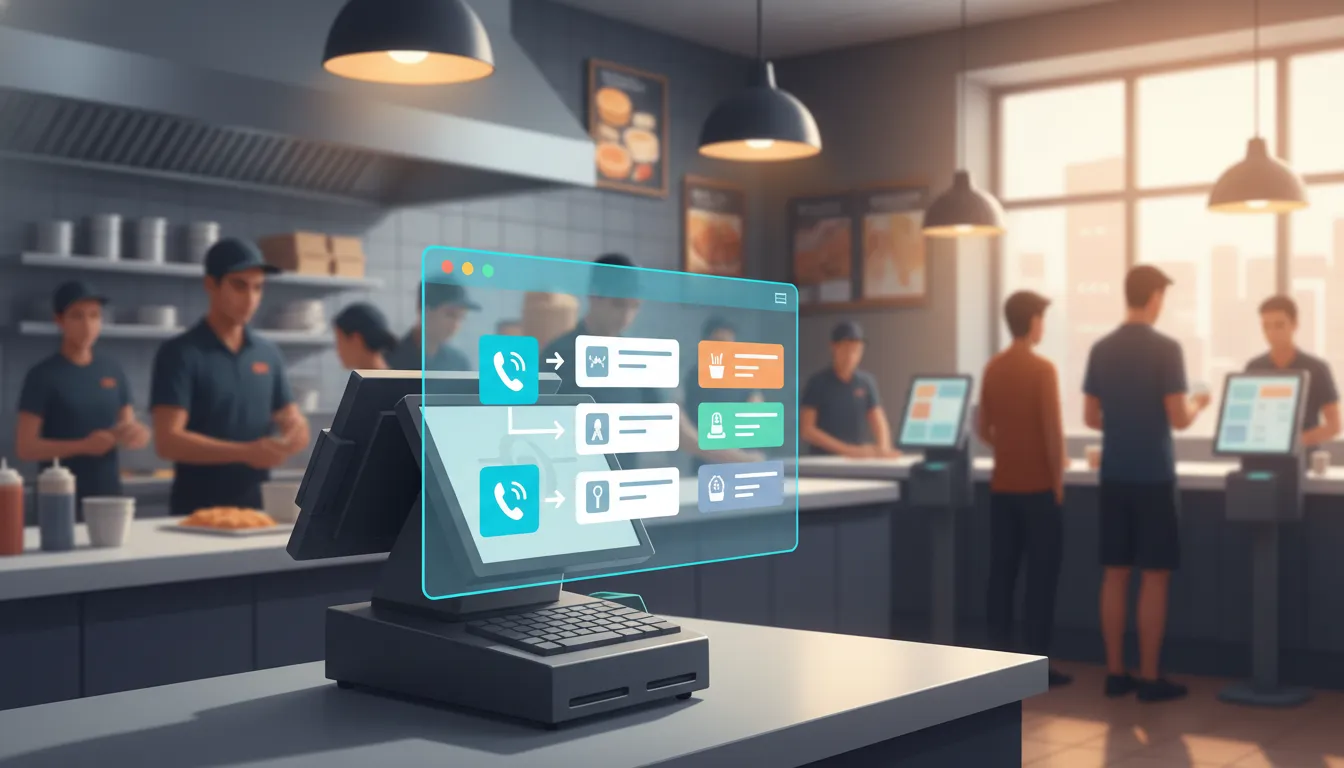
Phone orders do not arrive only when the front counter is quiet. During a rush, a ringing line competes with guests, order handoff, kitchen questions, and shift support. For multi-location operators, each unanswered call is a sales opportunity that may move to another restaurant.
BluIP cites the Big Mamas & Papa’s Pizzeria case study when reporting that restaurant clients generate $800 per hour in revenue per location during peak periods using AI-powered ordering. That result frames the issue: phone coverage is not only a service task. It protects an active ordering channel when demand is highest.
A single missed interaction can be hard to see on a shift report. Across a chain, repeated rush-hour gaps become a larger coverage problem. Operators need to know whether each store can accept order calls when labor is already focused on guests and food prep.
Orders without pulling staff away
For restaurants, AI phone ordering answers incoming calls during busy periods. Employees do not have to step away from in-store guests. It can gather items, modifiers, and order details through a guided call flow. When an issue needs judgment, the workflow can route it for staff help.
This split matters because employees can stay focused on food quality, checkout, and the guest in front of them. Calls still receive a clear path to place an order. Research on voice input for food and drink intake found the interface usable and acceptable in a studied setting.
The caller gets a simpler experience: an answered line and a clear menu exchange. The order path does not depend on a staff member reaching the phone. This helps a repeat guest during lunch, or a family placing a larger dinner order.
For chain teams, that balance also makes operations easier to manage. A brand can define which common calls move through the order flow. It can send unusual requests to a person. The goal is to reserve staff contact for cases where it adds value.
From answered calls to usable orders
Answering calls is only the first step. For a chain, the call flow must support menu choices, custom requests, and the order path used at each location. BluIP’s ai phone ordering solutions support POS integrations and automated upselling logic.
For restaurant leaders, the business case is practical:
- Capture order demand during peak periods instead of relying on an employee to answer each ring.
- Reduce call interruptions while frontline teams serve guests, prepare orders, and resolve exceptions.
- Use consistent menu and add-on prompts across locations, with staff available for calls that need help.
Operators can review whether callers reach an order flow and where staff help is needed. They can also assess which prompts fit the menu at each location. This is more useful than deploying voice automation without a plan for menus, exceptions, or POS routing.
How do restaurants handle peak-hour calls with AI?
First-response capacity during the rush
At lunch or dinner, the phone often rings while the counter and kitchen are already busy. An AI phone ordering system can answer new calls at the same time, instead of forming a hold queue. Guests can begin a simple request without waiting for a staff member to stop serving someone in front of them.
This approach is useful for AI phone ordering in restaurants because demand arrives in short bursts. The goal is not to rush callers through a script. It is to give each caller a clear first response, gather the request, and keep the shift moving. BluIP’s guide to handling peak hour restaurant calls with ai provides more context for rush-period planning.
Calls AI can resolve or direct
Peak-hour calls are not all food orders. A caller may ask whether an order is ready, request a reservation, ask about hours, or need help with an unusual change. A configured phone workflow can sort these requests at the start of each call. It can then complete a supported task or route the caller to a person.
- Take an order request, including menu items and stated changes.
- Respond to order status questions when current order data is available.
- Gather reservation details when reservations are part of the workflow.
- Route allergy questions, complaints, or unclear requests to trained staff.
Voice is a practical input method for food details when the workflow is designed and tested with users. A published study on collecting food and drink intake data with voice input assessed its usability and acceptance. For restaurant calls, that supports a careful design step. Test menu names, sizes, modifiers, and confirmation prompts before relying on automation during a rush.
Fewer interruptions for in-store teams
A ringing phone creates a choice for staff: pause an in-store interaction or let the call wait. When routine requests begin in the phone workflow, counter staff can focus on guests, handoffs, and order accuracy. Managers still set the escalation rules, so calls needing judgment reach a team member instead of getting trapped in automation.
The strongest setup connects phone tasks with existing restaurant operations. Order status responses need current data, reservation requests need clear availability rules, and routed calls need an owner. Teams evaluating ai phone ordering solutions should map these handoffs before a busy shift, then review where callers still require staff help.
How does AI phone ordering integrate with restaurant POS systems?
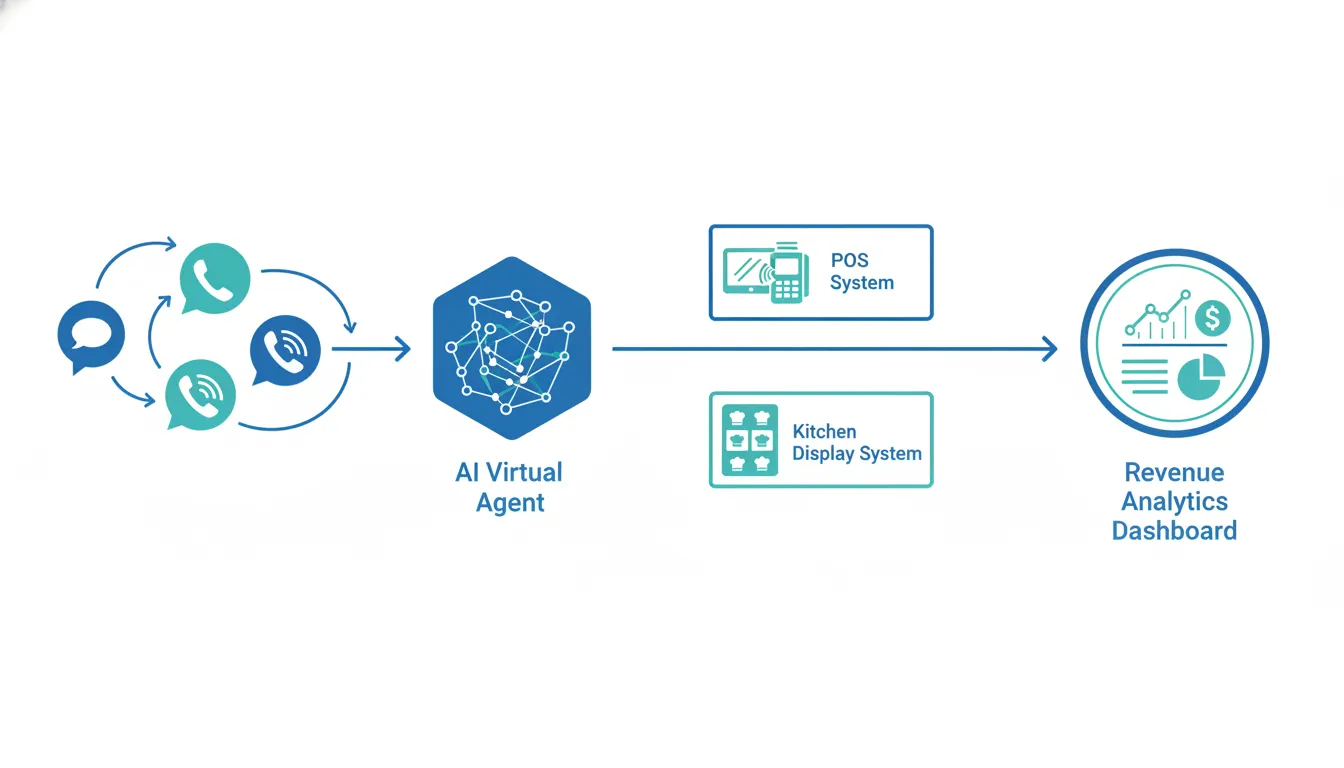
AI phone ordering for restaurants works best when the voice channel follows the same rules as the counter and app. The system must read approved menu data, build a valid ticket, and place it into the store workflow. BluIP supports connections with POS platforms such as Toast, Square, SpotOn, and Clover through ai phone ordering solutions for restaurant operations.
The POS data path
A POS connection gives the phone agent a controlled source for item names, prices, sizes, modifiers, taxes, and store hours. This matters when a guest says, “make that large,” removes an ingredient, or asks for a combo. The agent should present only choices the active store can sell at that time.
The same connection turns spoken choices into structured order fields. A voice-input study indexed by the National Library of Medicine examined how people reported food and drink through speech. In a restaurant flow, clear field mapping helps staff review the exact item, modifier, and quantity sent to the POS.
Steps from call to kitchen
For a chain operator, integration is not one switch. It is a set of checks applied to each location, menu version, service mode, and payment policy.
- Sync the live menu. The integration pulls orderable items, modifier groups, location pricing, availability rules, and daypart options from the approved POS setup.
- Capture and validate the order. The agent matches the guest request to valid products. It asks follow-up questions when a required size, side, or preparation choice is missing.
- Confirm price and fulfillment. The caller hears the items, changes, total, pickup or delivery choice, and expected timing before the ticket is submitted.
- Handle payment by policy. The flow can route payment into the POS-approved checkout process or mark payment for in-store collection. Operators choose the permitted method by brand and location.
- Send the ticket to production. After confirmation, the completed order moves through the POS into the kitchen display system or printer routing already used by the store.
- Log status and exceptions. The system records the confirmation and can send cases to staff when an item is unavailable, payment fails, or the request falls outside menu rules.
Controls for multi-location operators
Chains need a standard integration template, plus local controls. Corporate teams can set required modifier logic and routing rules. Each store still needs current hours, pricing, sold-out items, tax settings, and kitchen destinations. A staging test should include modifiers, unavailable items, payment outcomes, and rush-period routing before calls go live.
The goal is not to create a second ordering system. It is to let calls enter the existing operating flow with fewer manual transfers. Teams evaluating ai phone ordering for restaurants should ask how menu updates publish and how tickets are checked. They should also ask where exceptions appear for store staff.
What separates enterprise AI phone ordering from basic phone bots?
Three levels of phone coverage
A basic answering service can capture a message or direct a call. A generic voice bot may answer common questions and take simple requests. For multi-location operators, AI phone ordering for restaurants has a broader job. It must understand menu choices, guide orders into store workflows, and support each site during rush periods.
Voice ordering builds on a familiar customer action: speaking a food choice. Research has studied voice input for food and drink intake collection as a usable interface. In a restaurant, the added test is operational. Spoken details must become an order that the correct kitchen can fulfill.
| Comparison point. | Basic answering service. | Generic voice bot. | Enterprise AI phone ordering. |
|---|---|---|---|
| Primary job. | Routes calls or takes messages. | Handles common prompts. | Takes orders within store workflows. |
| Menu handling. | Staff follows up later. | Works with simple choices. | Processes items, modifiers, and requests. |
| System fit. | Separate from order flow. | May pass along text. | Connects order data with POS processes. |
| Multiple locations. | Routes by location. | Uses shared scripts. | Supports store menus and operating rules. |
| Operations support. | Call coverage. | Bot setup. | Rollout, testing, and support. |
Planning a multi-location rollout? Request a BluIP restaurant AI demo to compare your phone workflows, POS requirements, and store-level handoffs.
The integration test
The difference appears when an order becomes complex. A caller may change a size, remove an ingredient, add a side, and choose a pickup store. An enterprise platform needs menu logic and POS integration. Without that link, staff may need to rebuild each order by hand.
For restaurant groups, integration also means control across locations. Menus, hours, item availability, and paths to staff can vary by store. Operators assessing AI phone ordering solutions should ask how each location is configured. They should also ask how exceptions are tested before launch.
This is where a generic bot may fall short. It may sound natural on a basic request, yet lack the store rules behind the conversation. The issue is not whether it can answer. The issue is whether it can create a usable order in the right system.
Infrastructure and implementation
Software is only one part of phone ordering. Each call also depends on telephony, routing, traffic handling, and a clear staff handoff. These parts matter during a rush. A location has little time to correct an incomplete order or a call routed to the wrong store.
BluIP combines AIVA Connect with Tier1 communications infrastructure and implementation support. For a chain, voice automation and call delivery sit within the same operating plan. The practical work includes mapping menus and locations, connecting order flows, testing exceptions, and supporting stores after launch.
How AI upselling turns phone orders into larger tickets
In AI phone ordering for restaurants, an upsell should sound helpful, not forced. After a guest selects an entree, the system can ask about a drink, side, dessert, or meal bundle. The goal is simple: surface a fitting choice while the order is still easy to adjust.
Offer logic built from menu context
An AI phone agent can apply rules tied to the item, meal period, store menu, and available modifiers. A burger order might trigger fries and a beverage prompt. A family order may lead to a bundle offer. For catering tickets, it can check for utensils or sauces without repeating prompts.
Voice ordering also supports natural food and drink input. This use was studied in a voice-based intake collection study. That matters because an upsell must fit the conversation. Guests need to add, decline, or change an item in plain speech.
The offer library should reflect actual menu rules. Operators can limit prompts to in-stock items, valid dayparts, approved pairings, and current pricing. When an item is removed or sold out, its suggestion should stop at every connected location.
Building the ticket without slowing the call
A larger ticket does not require a long script. Use one relevant prompt after the core selection. Add a final loyalty sign-up or rewards prompt when it applies.
For example, a caller ordering pizza might hear a drink or dessert choice before checkout. A returning loyalty member might receive a reward reminder instead of a generic add-on. This approach keeps the exchange focused and gives each offer a clear reason.
Restaurant teams assessing ai phone ordering solutions should map offers to ticket data in the POS. Managers can then review accepted prompts by item, location, and daypart. That view shows which prompts support check average and which ones add friction.
Consistent offers with brand controls
Upselling rules need guardrails before they reach callers. A brand can approve offer language, allergen transfer wording, discount limits, and required handoffs. Stores can keep local menu differences while using the same voice and approval process.
This control matters for chains because each caller should hear a valid, on-brand option. A location should not suggest an unavailable dessert or apply a reward outside its terms. A useful starting point is BluIP’s ai phone ordering for restaurants guide.
Each location can then define the upsell rules it can support. Teams can test prompts in small groups and track the response. Keep offers that help guests complete an order. Revise scripts that cause repeats, declines, or transfers.
The result is a steady ordering experience with a measured path to larger phone tickets.
What should restaurant chains plan before rollout?
How should a pilot be designed?
A chain should not switch every restaurant on at once. Start with a pilot that mirrors the stores, menus, and call conditions expected after launch. Include a high-volume store, a quieter store, and one location with local menu variations.
Group locations before testing: same POS setup, menu version, hours, language needs, and service model. This keeps failures easy to trace and makes fixes repeatable across similar stores. Teams evaluating ai phone ordering solutions should define each group before integration work begins.
Set a pass or fail scorecard for the pilot. Track completed orders, handoffs, abandoned calls, order corrections, upsell acceptance, and time to resolve escalations. Compare each group against its own baseline, not against an unlike store. Save sample call outcomes for review with store managers.
Menu and call-condition checks
Menu QA must test how people place real orders. Use combos, size changes, unavailable items, substitutions, allergy questions, coupons, and requests that require staff help. A menu change process also needs an owner, a test call, and a release record before updates go live.
Voice testing should cover accents, background noise, drive-through sound, speakerphone audio, and callers who change an order mid-sentence. Published voice-input research assessed usability and acceptability when people reported food and drink intake by voice. That finding does not prove ordering accuracy. It supports testing voice use in a food-related task.
Create escalation rules before the pilot receives customer calls. Send allergy concerns, payment trouble, unclear modifiers, complaints, and out-of-stock conflicts to a trained employee. Define what the AI repeats for confirmation and what the staff member sees at handoff. This reduces guesswork during busy service.
Rollout governance and staff readiness
A rollout needs owners for menus, POS mapping, store readiness, reporting, and issue response. Use a dashboard that flags errors by location group, call reason, menu item, and escalation type. Review patterns each week in the pilot. Then set release gates for the next group.
Governance should also define pause rules. If a menu sync fails, transfer rates rise, or staff report unsafe routing, hold the next wave. Fix the cause, run the failed tests again, and record approval before adding locations. Store leaders should know who can approve a restart.
Train managers and front-line staff before expansion. They need to know when calls transfer, how to correct orders, where to log errors, and who approves menu fixes. Use real examples from handling peak hour restaurant calls with ai to prepare teams for demand spikes. Roll out only after the pilot meets agreed targets and open defects have named owners.
Which metrics prove AI phone ordering is working?
For restaurants, AI phone ordering needs more than a busy call log. They need a scorecard that connects guest access, order quality, staff time, and sales. Start with a baseline from the weeks before launch. Then review the same measures by location, daypart, and order channel.
Call capture and order completion
Measure answer rate first: the share of calls that reach a live or automated ordering flow. Pair it with abandonment, which shows how many callers leave before an order is placed. During rush periods, these measures show whether phone demand is being served or redirected.
Next, track order conversion: completed phone orders divided by eligible ordering calls. Keep reservation requests, hours questions, and order-status calls out of the denominator. Automated voice input can collect food and drink data in a usable way. A voice input usability study documents that use. Restaurant teams still need their own conversion and accuracy checks.
Order value and POS accuracy
Average ticket shows whether completed calls create useful sales, not just volume. Compare phone ticket size before and after launch. Also compare AI-handled orders with similar staff-handled orders. Upsell acceptance adds detail: record which offer was made, accepted, sent to the POS, and fulfilled.
- Average ticket by location, daypart, and call handling path.
- Upsell offer rate and acceptance rate by menu item.
- POS error rate for missing items, wrong modifiers, or failed transfers.
- Refunds, remakes, and voids linked to phone orders.
POS error rate keeps revenue gains honest. A higher ticket does not help when staff must remake an order or resolve a missed modifier. BluIP’s ai phone ordering solutions should be judged in the same data used for kitchen and checkout control.
Guest, labor, and location returns
Measure guest satisfaction after the order, using ratings, complaints, and repeat-order patterns when available. Review call transcripts or flagged calls for menu confusion, allergy questions, and handoffs. These checks show why a score changes, rather than reporting a score alone.
Labor impact is not only fewer calls handled by staff. Track minutes shifted away from phone ordering, staff interventions, escalations, and peak-shift coverage. The goal is to learn whether teams can spend more time on preparation, service, and exception handling.
Finally, compare phone-order revenue per location with its baseline and operating costs. An outcome-based SaaS review should use a clear 12-month ROI window. Tie POS and labor data to each location. That view separates a good demo from a system that supports store-level results.
Need help building the business case? Talk to BluIP about AI phone ordering for restaurants and review the metrics your leadership team should track.
Frequently Asked Questions
How do restaurants handle peak-hour calls with AI?
During rushes, an AI phone ordering system can answer concurrent calls, capture orders, and send confirmed details into the restaurant workflow. This reduces reliance on staff to pause in-store service for ringing phones. BluIP cites Big Mamas & Papa’s Pizzeria when reporting that restaurant clients using AI-powered ordering generate $800 per hour per location during peak periods. Each chain should validate results by store, daypart, and ordering channel.
How does AI phone ordering integrate with existing restaurant systems?
AI phone ordering connects the call flow to menus, modifiers, pricing, store hours, and order routing rules. A POS integration can pass validated orders into systems such as Toast, Square, SpotOn, or Clover, according to BluIP’s restaurant solution information. Before rollout, a chain should test substitutions, unavailable items, payments, taxes, and order confirmations at representative locations.
How much revenue can AI phone ordering generate for a restaurant?
Revenue measurement should compare phone orders before and after implementation by location and daypart. Track answered calls, completed orders, average checks, accepted upsells, cancellations, refunds, and labor time redirected from call-taking. BluIP states that restaurants may see a 20% to 25% increase in phone revenue when AI captures missed calls. Use a controlled pilot to separate AI effects from pricing, seasonality, and promotions.
Is AI phone ordering accurate for complex menu items?
AI phone ordering can process complex menu items when its menu data includes sizes, modifiers, exclusions, bundles, and location-specific availability. Accuracy depends on ongoing menu synchronization, confirmation prompts, and escalation paths for unusual requests. Restaurant teams should review order corrections, refunds, and transferred calls after launch, then update rules for modifiers or phrases that create errors.
Ready to put every restaurant call to work?
Every missed or delayed phone order can leave demand unanswered, while overloaded staff have less time to serve guests already in front of them. Waiting also extends the period when teams manually manage peak-hour calls, upsell prompts, order handoffs, and system questions that need clear ownership. Starting now gives operations and technology teams time to map call flows, POS requirements, rollout steps, and useful measures before the next planning cycle.
Ready to evaluate AI ordering across your locations? Schedule a restaurant AI phone ordering consultation to review peak-hour call needs and POS connections. Talk through implementation priorities, upsell workflow controls, measurement needs, and a rollout approach your teams can assess with confidence.